Bedroom Door & Bed Placement
How bedroom door relationships, entryway circulation, and sightlines influence psychological peace and bedroom energy dynamics.
Explore Your Personal Layout
Detect door alignment issues in seconds with AI camera analysis
1. Why Does the Bedroom Door Matter?
The doorway is the architectural threshold between the public zones of your home and your intimate private world. In environmental design, doorways act as valves through which air, acoustic vibrations, and household movement flow.
Where and how your bed relates to this threshold directly governs your sense of boundary, privacy, and vulnerability during sleep.
2. Bed Facing the Bedroom Door
When the bed is positioned directly in line with an open doorway, rushing air currents funnel straight toward the occupant. In traditional Chinese terminology, this alignment is known as Sha Chi or the 'coffin position' because historical caskets were borne feet-first through thresholds.
Beyond ancient phrasing, modern sleep research confirms that sleeping directly in a high-traffic draft channel elevates nocturnal restlessness and increases subconscious arousal states.
3. Bed Beside the Door
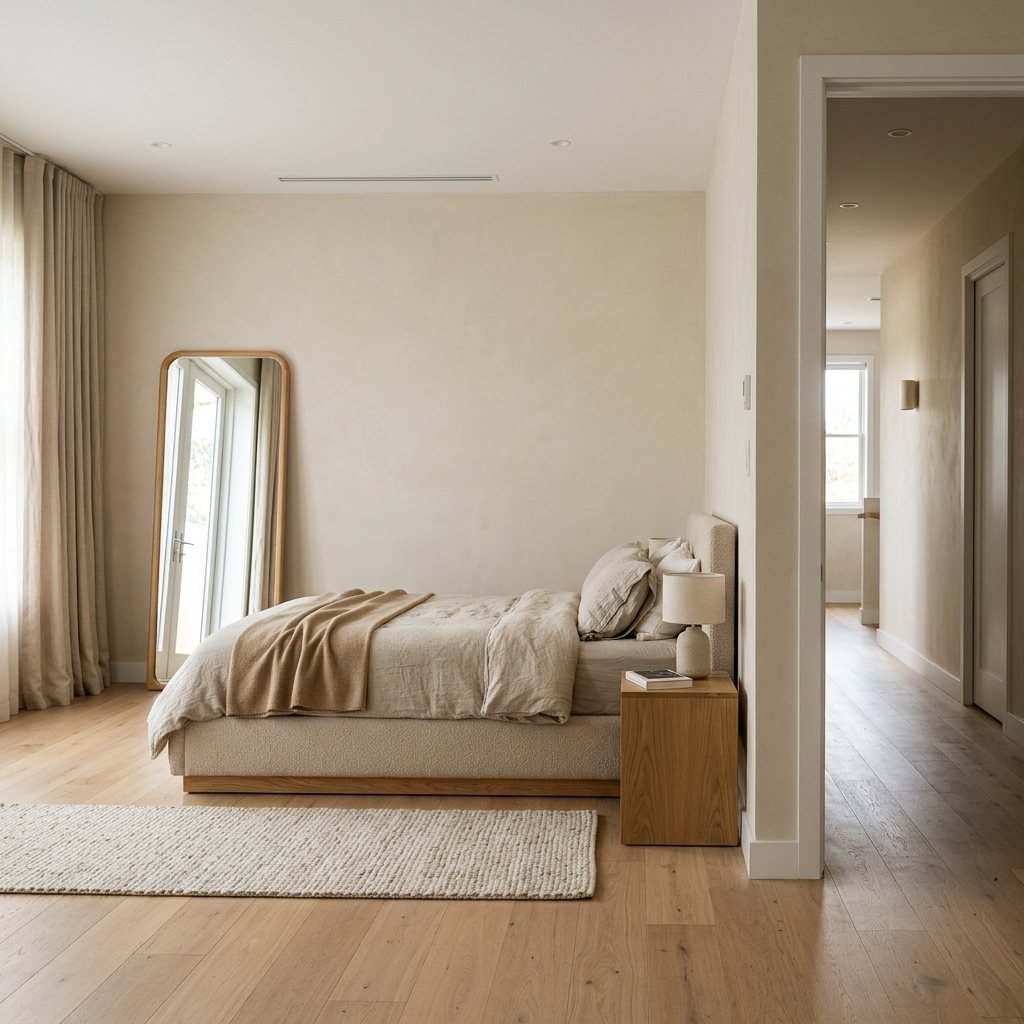
Another common layout compromise is placing the headboard on the exact same wall as the doorway, right beside the jamb. While this avoids direct foot-pointing alignment, it creates a visual blind spot: anyone opening the door cannot be seen until they are fully inside your personal zone.
If you must place your bed along the doorway wall, place a substantial bedside table or a subtle room divider to create an acoustic and psychological cushion between the hinge and your pillow.
4. Door and Bed Alignment
The ideal alignment is a balanced diagonal. You want a clear 45-degree angle from your pillow to the entry door. This position gives your eyes effortless command of the entryway without placing your body in the path of incoming air or movement.
Door-to-Bed Spatial Rules
- Clear line of sight to door handle without head-turning strain
- Foot of bed offset at least 2 feet from doorway swing path
- Bathroom ensuite doors kept securely closed during rest hours
5. Bedroom Entrance and Privacy
Your bedroom entrance should welcome you with a feeling of decompression. If opening the door reveals immediate visual clutter, laundry hampers, or sharp desk corners, your transition into relaxation is instantly impeded.
Ensure the door can swing open fully to 90 degrees without bumping into coats or furniture behind it. A door that opens smoothly creates an intuitive sense of welcoming ease.
6. Improving Bedroom Flow
If moving your bed away from a doorway is architecturally impossible in a compact layout, consider these three modern design interventions:
- The End-of-Bed Bench: A stylish upholstered bench at the foot of the bed acts as a physical energetic barrier to diffuse drafts.
- Tactile Rug Zoning: Lay a plush natural wool rug under the bed that extends past the doorway line to visually ground the sleeping island.
- Door Sweep or Draft Stopper: Install a dense acoustic sweep at the base of the bedroom door to eliminate hallway light bleed and air movement.
7. Frequently Asked Questions
Cultural Practice & Educational Intent: Feng Shui interpretations are based on traditional Chinese practices and cultural perspectives. They are intended for educational and personal reflection, not scientific, medical, financial, or professional advice. SPACE × SELF champions evidence-informed interior design alongside timeless cultural mindfulness.
Understand Your Space. Understand Yourself.
Upload a bedroom photo to instantly audit bed placement, door alignment, window drafts, and energetic flow with our modern visual engine.
Analyze My BedroomRelated Spatial Guides
Commanding Position Checker
Simulate bed-to-door sightlines, window drafts, and mirror reflections in 2D.
Launch Simulator → Interactive ToolKua Number & Lucky Bed Direction
Free BaZhai calculator for your personal sleep & desk compass alignment.
Calculate Direction → AI Vision AuditAI Bedroom Spatial Analysis
Upload your room photo to audit commanding position, doors and mirrors.
Analyze Bedroom → Spatial GuideBed Placement Guide
Discover optimal diagonal bed placement and solid wall support.
Read Guide → Spatial GuideBedroom Feng Shui
Holistic room harmony and wellness layout principles.
Read Guide → Spatial GuideMirror Feng Shui
Keep reflections peaceful and angled away from entrances.
Read Guide → Spatial GuideFeng Shui Overview
Comprehensive modern guide to spatial balance.
Read Guide →