Living Room Feng Shui
Design an inviting, balanced gathering space that nurtures family connection, social ease, and seamless spatial flow.
Explore Your Personal Layout
Living room scanner coming soon • Start with our live bedroom audit today
1. What Makes a Living Room Feel Balanced?
The living room is the energetic hub of communal life. Unlike the bedroom, which requires protective stillness, the living room thrives on lively, harmonious circulation (balanced Yang energy).
A balanced living room encourages people to sit comfortably, engage in organic conversation, and feel both sheltered and connected to the natural world outside.
2. Sofa Placement
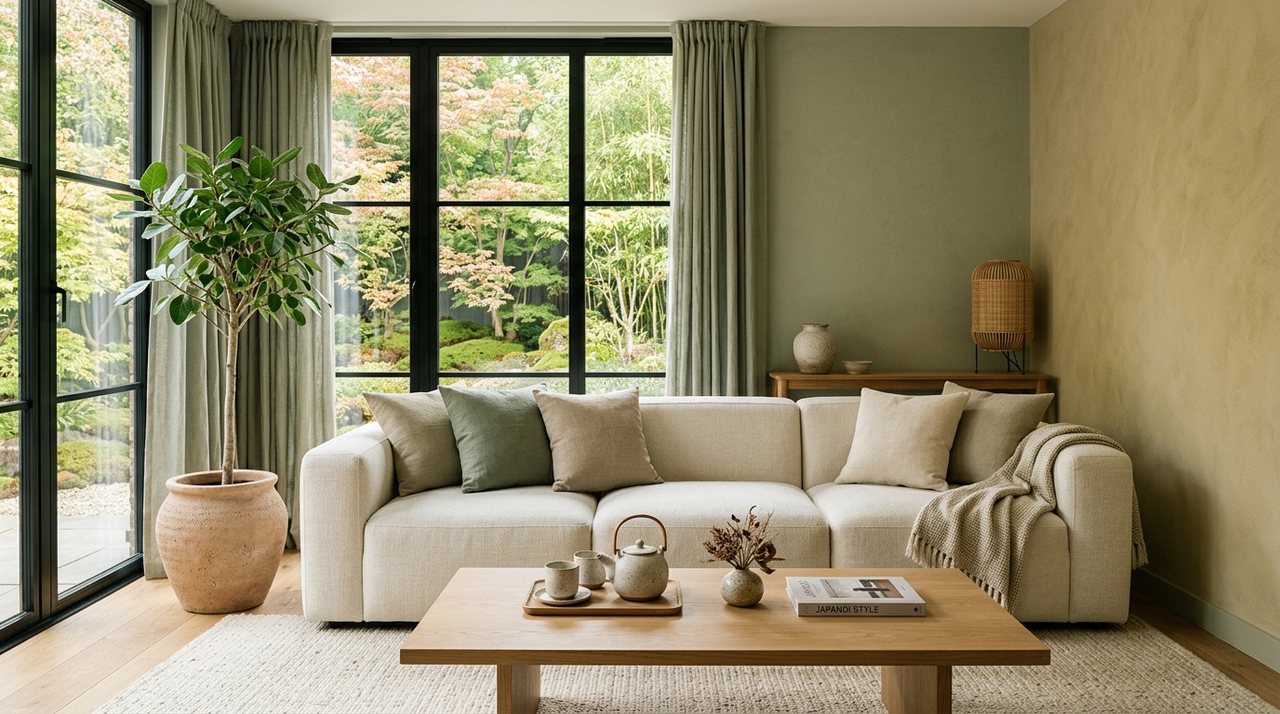
The primary sofa is the anchor of the living room. Just like the headboard in a bedroom, the main seating piece should ideally be backed by a solid wall rather than floating in the center of an open hallway.
Sitting with an open expanse or high-traffic corridor behind your back creates unconscious physical tension. If your open-concept floor plan requires a floating sofa, place a sturdy console table with lamps or plants directly behind it to establish an artificial anchor wall.
3. The Main Entrance
In many apartments, opening the front door leads immediately into the living room. If visitors step directly into seating areas, vital energy rushes in too aggressively.
Establish a defined entryway foyer—even in tight quarters—using an entryway runner rug, a slim shoe bench, or a slatted wooden divider to gently slow incoming traffic.
4. Furniture and Circulation
Circulation should flow like a meandering stream rather than a rigid grid. Ensure walkways between the coffee table, chairs, and media consoles are at least 30 to 36 inches wide so occupants never have to squeeze through sideways.
Arrange seating in welcoming clusters (such as an L-shape or facing armchairs) that promote intimate conversation without forcing everyone to stare solely at a television screen.
5. Windows and Natural Light
Windows bring vital vitality into the communal zone. Keep window sills clean and unobstructed by heavy, dark furniture. Use sheer linen drapes that diffuse harsh mid-afternoon glare into soft ambient glow.
6. Living Room Clutter
Because living rooms host numerous activities—entertainment, reading, dining, and kids’ toys—clutter accumulates rapidly. Closed credenzas and tactile woven baskets allow you to clear visual clutter in minutes, preserving the room's serene atmosphere.
7. Creating Better Spatial Flow
Incorporate curved or rounded coffee tables to soften spatial movement. Sharp table corners (known in Feng Shui as 'poison arrows') can make narrow pathways feel hazardous and rigid.
8. Simple Living Room Feng Shui Changes
Back your main couch against a solid wall or console table.
Introduce an oval or circular coffee table for smooth circulation.
Add a tall potted ficus or palm in the corner to stimulate gentle Chi.
9. Frequently Asked Questions
Cultural Practice & Educational Intent: Feng Shui interpretations are based on traditional Chinese practices and cultural perspectives. They are intended for educational and personal reflection, not scientific, medical, financial, or professional advice. SPACE × SELF champions evidence-informed interior design alongside timeless cultural mindfulness.
Understand Your Space. Understand Yourself.
Upload a bedroom photo to instantly audit bed placement, door alignment, window drafts, and energetic flow with our modern visual engine.
Explore Your SpaceRelated Spatial Guides
Commanding Position Checker
Simulate bed-to-door sightlines, window drafts, and mirror reflections in 2D.
Launch Simulator → Interactive ToolKua Number & Lucky Bed Direction
Free BaZhai calculator for your personal sleep & desk compass alignment.
Calculate Direction → AI Vision AuditAI Bedroom Spatial Analysis
Upload your room photo to audit commanding position, doors and mirrors.
Analyze Bedroom → Spatial GuideFloor Plan Analysis
See how living rooms interact with entryways and bedrooms across your home.
Read Guide → Spatial GuideBedroom Sanctuary
Complement communal vitality with deep nocturnal recovery.
Read Guide → Spatial GuideDoor & Entrance Harmony
Master threshold transitions from the outside world into your home.
Read Guide → Spatial GuideFeng Shui Overview
Explore modern space harmony across all living zones.
Read Guide →